-
Screening Justice - The Cinema of Law: Significant Films of Law, Order and Social Justice
Rennard Strickland, Teree Foster, and Taunya L. Banks
Screening Justice is designed to tell the complex story of law through an exploration of forty films focusing upon courtroom dramas, social issues and questions of justice. These motion pictures are evaluated by distinguished scholars who, using a range of narrative styles, compare the law on the screen and the law in action. The work serves as a guide to understanding law, the rhetoric of law and images of justice. The book will introduce readers to new films as well as help create new perspectives on familiar classic movies.
-
Rescuing Science from Politics: Regulation and the Distortion of Scientific Research
Wendy E. Wagner and Rena I. Steinzor
Rescuing Science from Politics debuts chapters by the nation's leading academics in law, science, and philosophy who explore ways that the law can be abused by special interests to intrude on the way scientists conduct research. The high stakes and adversarial features of regulation create the worst possible climate for the honest production and use of science especially by those who will ultimately bear the cost of the resulting regulatory standards. Yet an in-depth exploration of the ways in which dominant interest groups distort the available science to support their positions has received little attention in the academic or popular literature. The book begins by establishing non-controversial principles of good scientific practice. These principles then serve as the benchmark against which each chapter author compares how science is misused in a specific regulatory setting and assist in isolating problems in the integration of science by the regulatory process.
-
Principles of Federal Income Taxation, 7th edition
Daniel Q. Posin Jr. and Donald B. Tobin
Includes analysis of cases and concepts of the leading casebooks, explanations with amplified diagrams and flow charts, and extensive treatment of the time value of money issues. Explores exotic Wall Street techniques employed to avoid capital gains. In clear language, this book explains equity swaps, shorting against the box, swap funds, and DECS. Presents, among other high-profile situations, a case study of how former Treasury Secretary William Simon and his partners made $700 million in profits on the sale of the Avis car rental agency less than two years after they bought it and paid no taxes.
-
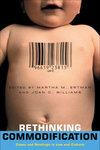
Rethinking Commodification: Cases and Readings in Law and Culture
Martha M. Ertman and Joan C. Williams
What is the price of a limb? A child? Ethnicity? Love? In a world that is often ruled by buyers and sellers, those things that are often considered priceless become objects to be marketed and from which to earn a profit. Ranging from black market babies to exploitative sex trade operations to the marketing of race and culture, Rethinking Commodification presents an interdisciplinary collection of writings, including legal theory, case law, and original essays to reexamine the traditional legal question: ̶To commodify or not to commodify?”
In this pathbreaking course reader, Martha M. Ertman and Joan C. Williams present the legal cases and theories that laid the groundwork for traditional critiques of commodification, which tend to view the process as dehumanizing because it reduces all human interactions to economic transactions. This “canonical” section is followed by a selection of original essays that present alternative views of commodification based on the concept that commodification can have diverse meanings in a variety of social contexts. When viewed in this way, the commodification debate moves beyond whether or not commodification is good or bad, and is assessed instead on the quality of the social relationships and wider context that is involved in the transaction. Rethinking Commodification contains an excellent array of contemporary issues, including intellectual property, reparations for slavery, organ transplants, and sex work; and an equally stellar array of contributors, including Richard Posner, Margaret Jane Radin, Regina Austin, and many others.
-

The Full Faith and Credit Clause: a Reference Guide to the United States Constitution
William L. Reynolds and William M. Richman
This work examines all the aspects of the Full Faith and Credit Clause and its importance in the development of United States law. It begins with the birth of the clause and the history underlying its adoption. This includes discussions held at the Constitutional Convention and the early judicial interpretations of the clause. The book looks separately at the individual components that embody the clause--those that deal with records, public acts, and judicial proceedings. The book also zeroes in on the relationship between the clause and the issues of family law. It covers marriage, divorce, support, and child custody, all issues that have demanded serious attention in recent years.
-
A New Progressive Agenda for Public Health and the Environment
Christopher Schroeder and Rena I. Steinzor
Over the last quarter century, much of the focus of federal regulatory policy in the areas of health, safety, and the environment has been gradually redirected away from protecting Americans against various harms and toward protecting corporate interests from the plain meaning of protective statutes. This book delivers precisely what its title promises, a re-imagining of federal policy in these areas, with particular focus on the regulatory process. It identifies the failings of the current approach to regulation and proposes innovative, straightforward, and practical solutions for the 21st Century. The book is a collaboration among the Member Scholars of the Center for Progressive Regulation.
-
Privileges and Immunities: a Reference Guide to the United States Constitution
David S. Bogen
The privileges and immunities clauses in the U.S. Constitution forbids one state from discriminating against citizens of another state with respect to privileges and immunities that state affords its own citizens. Of course, the history, interpretation, and rulings on Article IV and the Fourteenth Amendment are much more nuanced and controversial. Bogen details the origins and development of the concept of privileges and immunities, and provides an in-depth analysis of the symbiotic relationship between Article IV and the Fourteenth Amendment, detailing the current understanding of the clauses as reflected in the decisions of the Supreme Court. The author concludes by arguing that the tension between the Framers' intent to protect fundamental human rights and the Court's current confused and inappropriate use of rights language may be resolved by applying customary international human rights to the states. An extensive bibliographic essay and a table of cases are provided to guide further reading on the topic.
-
First Amendment Law: Cases, Comparative Perspectives, and Dialogues
Donald E. Lively, William D. Araiza, Phoebe A. Haddon, John Knechtle, and Dorothy E. Roberts
-
American Probate: Protecting the Public, Improving the Process
Paula A. Monopoli
New Hampshire judge and probate attorney John Fairbanks, a court-appointed executor and trustee, stole thousands of dollars from the estates of his trusting elderly clients. Successful Virginia lawyer David Murray misappropriated nearly four million dollars from estates entrusted to him in one of the largest financial swindles by a lawyer in U.S. history. Enterprising attorney James Gunderson drafted wills and living trusts for many residents of Leisure World in Orange County, California, who named him the sole trustee and major beneficiary.
These are just some of the cases examined by Paula A. Monopoli to illustrate the unsettling prevalence of fraud and abuse inherent in American probate law. Probate courts are intended to provide a vehicle for the orderly disposition of property after death, to balance the interests of creditors, the government, and heirs, and to protect the rights of the elderly and others with special needs. In this insightful work, Monopoli shows how an array of flaws in the system allows corrupt and unethical lawyers to take advantage of the nation's most vulnerable citizens. She delves into such subjects as the history and purpose of probate, procedural complexities, lack of regulatory oversight, inadequate judicial resources, and the growth of non-probate alternatives, concluding with a blueprint for reform that emphasizes deterrence, detection, and compensation for the victims.
This informative account casts new light on the intricacies and failures of a legal process that affects millions of Americans every year.
-
Principles of Federal Income Taxation, 6th edition
Daniel Q. Posin and Donald B. Tobin
Includes analysis of cases and concepts of the leading casebooks, explanations with amplified diagrams and flow charts, and extensive treatment of the time value of money issues. Explores exotic Wall Street techniques employed to avoid capital gains. In clear language, this book explains equity swaps, shorting against the box, swap funds, and DECS. Presents, among other high-profile situations, a case study of how former Treasury Secretary William Simon and his partners made $700 million in profits on the sale of the Avis car rental agency less than two years after they bought it and paid no taxes.
-
Judicial Process in a Nutshell
William L. Reynolds
Explores the process by which American judges decide cases and analyzes questions involving common-law adjudication and statutory interpretation. Additional subjects are touched upon, such as constitutional decision making and problems concerning the trial of issues.
-
Cases and Materials on the Law of Torts, 4th edition
Harry Shulman, Fleming James, Oscar S. Gray, and Donald G. Gifford
The opinions included in this law school casebook are designed for teaching case analysis and the social and economics consequences of legal decisions. Enough of the majority, and often the dissent opinion is presented to illustrate how the case fits with precedents and allows students to evaluate the arguments on either side of the case. It emphasizes accidents and the role of fault in society's management of their costs, and the historical basis for modern torts doctrines. It details intentional torts and a wide range of other non-accident wrongs.
-
Conflict of Laws: Cases, Materials and Problems
David H. Vernon, Louise Weinberg, William L. Reynolds, and William M. Richman
Conflicts courses have become increasingly important to preparation for a sophisticated practice of law, whether in counseling or litigation. Because modern Conflicts law is undergoing significant and complex changes in many states, the authors include new discussions of emerging areas, notably international aspects of conflicts of laws and Internet jurisdiction. Further reflecting the fact that the Second Restatement has become the dominant choice-of-law methodology in over half the states, this new edition contains an extensively revised and supplemented treatment of those provisions.
-

Protecting the Human Rights of Religious Minorities in Eastern Europe
Peter G. Danchin and Elizabeth A. Cole
The ousting of the communist regimes has not guaranteed the protection of human rights. The historical reality is that discrimination against minority religious and ethnic groups is often part of a broader monolithic nationalism. As official atheism is replaced by varying models of church-state arrangements, how much will the rule of law prevail against resurgent nationalism and intolerance toward minorities? These nineteen essays consider this question. The authors represent eleven countries (four essays discuss Western Europe ) and include theologians, political and social scientists, legal scholars, and human rights professionals. Whether considering Bulgaria's policy toward Muslims or Christian-Jewish dialogue in Poland, these provocative essays shed new light on human rights in a globalizing world.
-
Marbury versus Madison: Documents and Commentary
Mark A. Graber and Michael Perhac
Marbury versus Madison combines documents and analytical essays timed for the bicentennial year (2003) of one of the most important Supreme Court cases. This timely collection will explain:
- the constitutional, political, philosophical background to judicial review
- the historical record leading to this landmark case
- the impact of the decision since 1803
- its impact on the world stage, especially for new and emerging democratic nations.
Also includes a listing of all the Supreme Court cases citing Marbury an an annotated Marbury v. Madison.
-
Understanding Conflict of Laws
William M. Richman and William L. Reynolds
This Understanding treatise provides authoritative and comprehensive explanations of major theories and leading cases covered in Conflict of Laws courses. A family law chapter includes substantial new material on federal legislative responses to the serious problem of child support enforcement. Understanding Conflict of Laws also includes a new section on cyberspace jurisdiction.
-
Der Vereinigungsschock: Vergleichende Betrachtungen zehn Jahre danach
Wolfgang Schluchter and Peter E. Quint
-
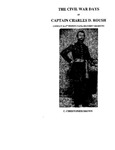
The Civil War Days of Captain Charles D. Roush: Company B, 6th Pennsylvania Regiment Reserves
C. Christopher Brown
The Civil War diary of Capt. Charles Roush provides valuable insight into the life of a Union soldier who marched in 1861 and 1862 through the rolling hills of Maryland and Virginia, ending at the battle of South Mountain, where Roush was injured, just a couple of days prior to Antietam.
His diary relates the dreariness of war. Disease was arguably a far more potent adversary than the Southern troops. Winter brought bad weather, much sickness, as well as McCellan’s infamous forced “promenade” through northern Virginia.
In May 1862, after returning from a long march, Roush encountered two special visitors to his camp: the President and Secretary of War. Lincoln also appeared at Roush’s station a second time. Nevertheless, Roush quickly lost his interest for war. His diary relates that he was “opposed to a political abolition war.” His diary contained constant references to his poor health.
At one point, he noted, “he had no provisions for 3 days.” In September Roush suffered the injury that ended his Civil War career. A musket ball struck him in the foot. Unbeknownst to Roush, the injury spared him from the rigors of the bloody battle of Antietam.
-
The French Penal Code of 1994, as amended as of January 1, 1999
Edward A. Tomlinson
A significant improvement over the Code it replaced (Volume 1 in the Series), this new Code provides a coherent structure and a high degree of internal consistency.
-
US-amerikanisches Handels- und Wirtschaftsrecht, 2d edition
Michael P. Van Alstine and Siegfried H. Elsing
-
Family Law: Cases, Materials, and Problems
Peter N. Swisher, Anthony Miller, and Jana B. Singer
The Second edition of Family Law addresses contemporary family law issues and analyzes the public and private dichotomy in contemporary family law relationships.
-
A Constitutional Law Anthology, 2d edition
Michael J. Glennon, Donald E. Lively, Phoebe A. Haddon, Dorothy E. Roberts, and Russell L. Weaver
Printing is not supported at the primary Gallery Thumbnail page. Please first navigate to a specific Image before printing.